
Why We Act: Understanding “Loss Aversion in Everyday Life” (from Misbehaving)
As a blogger, I constantly ponder one question: How can I get more people to read my posts? Like many, I researched SEO and heard that selecting the right “keywords” based on search volume is crucial.
However, despite my efforts with keyword analysis, I rarely achieved the high view counts I hoped for. Frustrated, I turned away from technical manuals and toward books on psychology and the humanities. I realized that understanding human nature is fundamental to understanding why people click.
A book I recently finished, Misbehaving: The Making of Behavioral Economics by Richard Thaler, explains human psychology in an exceptionally intuitive way. Today, I want to share key insights from the book, specifically focusing on loss aversion in everyday life.
The Pain of Loss > The Joy of Gain
Imagine someone offers you a coin toss. If it’s heads, you win $1,000. Would you take the bet? Most people, myself included, would say yes.
Now, what if the deal changes? Heads, you win $1,000; tails, you lose $1,000. Would you still do it? Suddenly, the hesitation kicks in.
I used to think people were primarily motivated by benefits. But when you think calmly, a gain is “nice to have,” but you can live without it. However, losing something precious sparks anger and fear. The pleasure of satisfaction is not equal to the pain of loss.
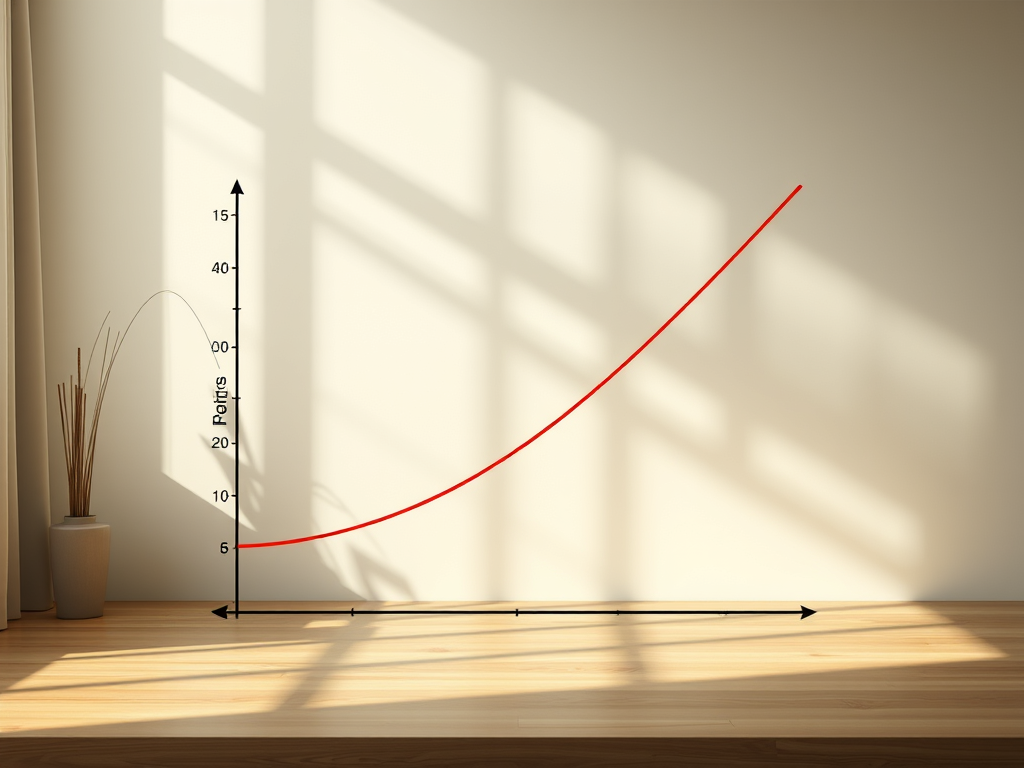
Behavioral economics introduces a “value function graph” to illustrate this. The curve showing the pain of losing $1,000 is much steeper than the curve showing the joy of gaining $1,000. This psychological phenomenon is known as loss aversion.
How Loss Aversion in Everyday Life Drives Action
This concept isn’t just about money; it applies deeply to human relationships and our daily actions.
I once wrote a blog post about the controversial topic of male-female friendships. Why are people so invested in this issue? It’s because of the anxiety related to the potential loss of a partner or a friend. People who fear losing something are driven to act urgently.
Whole industries are built on leveraging loss aversion in everyday life. Insurance is a prime example—paying to prevent a potential future loss. Even on my blog, posts related to preventing mistakes or losses tend to get more views. The human psychology that prioritized safety for survival over hundreds of thousands of years is still active today.

Why Small Things Matter More: Diminishing Sensitivity
The insights from the value function graph don’t stop at loss aversion. Look at the slope of the curve—it flattens as the amounts get larger.
This explains why the negative feeling of a $10 item increasing to $20 is much more intense than a $100 item increasing to $110. It perfectly explains my own behavior: I hesitate when my usual $1.20 coffee is sold out and I have to buy a $2.50 alternative, yet I don’t blink when choosing a $39 delivery meal over a $35 one.
This concept, known as diminishing sensitivity, also explains why we often feel greater satisfaction from small, simple pleasures. We experience joy and sorrow more intensely over things of smaller initial value. This holds true in relationships, too. I have deeper, more lasting impressions of people who showed consideration in small details than of those who treated me to expensive meals once.
Reading this back, it seems obvious. Yet, I’ve come to feel there is a huge difference between “knowing” something and “actively using” that knowledge. Understanding loss aversion in everyday life has motivated me to organize these thoughts and share them with you.
Thank you for reading, and I hope you have a day without any losses.
Further Reading for Context